
Introduction
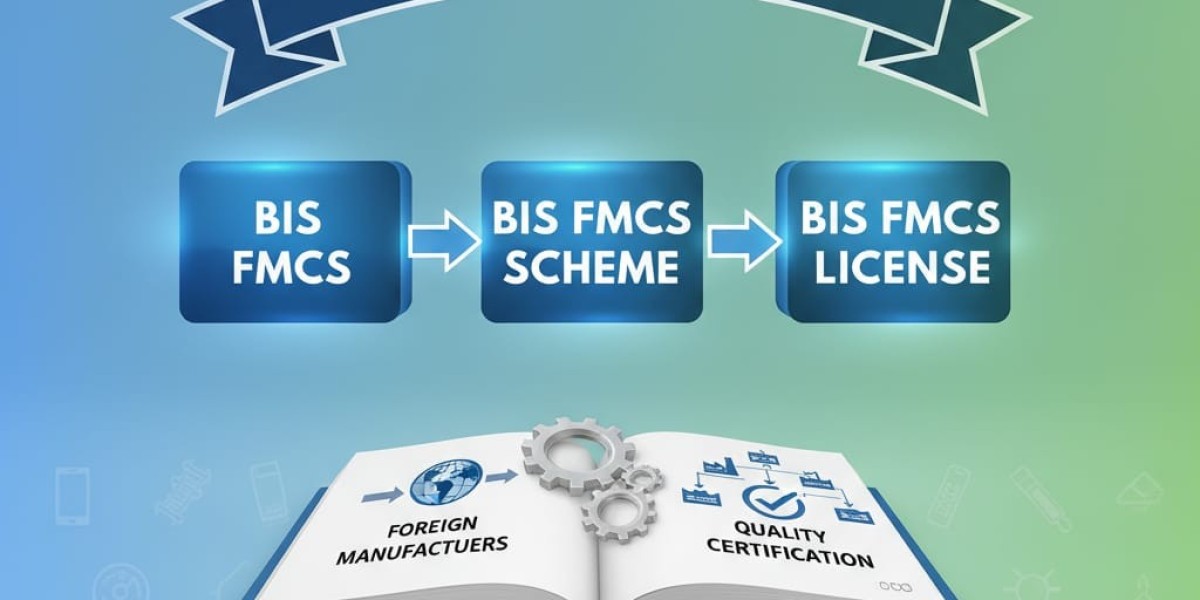
When foreign manufacturers want to export products to India, compliance with Indian standards becomes mandatory. This is where BIS FMCS plays a crucial role. The Foreign Manufacturers Certification Scheme ensures that products manufactured outside India meet the quality and safety standards defined by the Bureau of Indian Standards (BIS). In this blog, we will explain everything about BIS FMCS Scheme, BIS FMCS License, and BIS FMCS Certificate in a simple and easy-to-understand manner.
What is BIS FMCS?
BIS FMCS stands for Foreign Manufacturers Certification Scheme. It is a certification program introduced by the Bureau of Indian Standards to allow foreign manufacturers to use the ISI mark on their products. Under this scheme, overseas manufacturers can certify their products according to Indian standards before exporting them to India.
Key Objective of BIS FMCS:
Ensure product quality and safety
Protect Indian consumers
Maintain uniform standards for imported goods
Understanding BIS FMCS Scheme
The BIS FMCS Scheme is designed specifically for manufacturers located outside India. It allows them to obtain BIS certification and legally sell their products in the Indian market.
Features of BIS FMCS Scheme:
Applicable to foreign manufacturers only
Mandatory for certain product categories
Requires factory inspection by BIS officials
Includes product testing in BIS-recognized labs
The scheme ensures that imported products meet the same standards as those manufactured in India.
What is BIS FMCS License?
The BIS FMCS License is an official authorization granted to foreign manufacturers after successful verification and compliance.
Once the license is issued:
The manufacturer can use the ISI mark on products
Products can be exported and sold in India
The business gains credibility in the Indian market
The license is generally valid for a specific period and must be renewed as per BIS guidelines.
What is BIS FMCS Certificate?
The BIS FMCS Certificate is proof that the foreign manufacturer’s product complies with Indian standards. It confirms that the product has passed testing, inspection, and quality checks conducted by BIS.
Importance of BIS FMCS Certificate:
Legal approval to sell in India
Builds consumer trust
Ensures product safety
Enhances brand reputation
Without this certificate, many products cannot be imported into India.
Products Covered Under BIS FMCS
Several products require mandatory certification under the FMCS scheme, such as:
Cement and construction materials
Electrical appliances
Chemicals and fertilizers
Steel and metal products
Foreign manufacturers must check whether their product falls under mandatory certification before exporting.
BIS FMCS Application Process
Obtaining certification under the BIS FMCS Scheme involves multiple steps:
1. Nomination of Authorized Indian Representative (AIR)
Foreign manufacturers must appoint an Authorized Indian Representative to handle compliance and communication with BIS.
2. Application Submission
Submit the application along with required documents and fees.
3. Product Testing
Samples are tested in BIS-approved laboratories to ensure compliance with Indian standards.
4. Factory Inspection
BIS officials visit the foreign manufacturing unit to verify production processes and quality control systems.
5. Grant of BIS FMCS License
After successful verification, BIS grants the license and certificate.
Documents Required for BIS FMCS
To apply for BIS FMCS Certificate, the following documents are required:
Business registration documents
Manufacturing unit details
Product specifications
Test reports
Quality control manuals
Details of Authorized Indian Representative
Accurate documentation helps avoid delays in approval.
Validity and Renewal of BIS FMCS License
The BIS FMCS License is usually valid for one year and must be renewed periodically.
Renewal Requirements:
Updated product test reports
Compliance with BIS standards
Payment of renewal fees
Regular compliance ensures uninterrupted business operations in India.
Challenges in BIS FMCS Certification
Foreign manufacturers may face certain challenges, such as:
Complex documentation procedures
Coordination with Indian authorities
Factory inspection requirements
Time-consuming approval process
Proper planning and expert guidance can help overcome these issues.
Benefits of BIS FMCS Certification
Getting certified under the BIS FMCS Scheme offers several advantages:
Access to the Indian market
Increased customer confidence
Legal compliance with Indian laws
Competitive advantage over uncertified products
It also strengthens the global reputation of the manufacturer.
Conclusion
The sunconsultants.co.in., including the BIS FMCS Scheme, BIS FMCS License, and BIS FMCS Certificate, is essential for foreign manufacturers who want to enter the Indian market. It ensures that imported products meet strict quality and safety standards, protecting consumers and maintaining trust. Although the process may seem complex, it is a necessary step for long-term business success in India. By following the correct procedures and ensuring compliance, manufacturers can smoothly obtain certification and expand their market reach.